Category Archives: Health and fitness

Articles by me about health and fitness issues. Things that make you go Hmmmmm

How to keep your New Year Resolutions this time

www.facebook.com/chrishuntofficial
www.chrishuntwellness.com

Chris Hunt Wellness Runner

www.chrishuntwellness.com

This is Part One of my blog about New Year’s Resolutions, Part Two will follow soon.

On January 1st, millions of people begin the annual ritual of New Year’s Resolutions. Memberships at health clubs and diet programs soar, whilst sales of chocolate and alcohol decline. People take a long, hard look at their spending habits as they sort through the January bills.

Yet despite all this good intention, most people will fail at their resolutions. Come February, most New Year’s resolutions will be a dim memory. How can such apparently strong determination fizzle out so quickly? What can we do to increase the likelihood that our desire for change will translate into permanent positive change?

Chris Hunt Wellness  Healthy Eating

Let’s first examine the psychology of the New Year’s Resolution. During the month of December people tend to overindulge in eating, drinking, spending money and neglecting exercise. Rather than moderate these behaviours, we promise ourselves that after the holiday season is over, we will definitely take control. In the meantime, we give ourselves permission to overindulge without guilt. Our resolve is at its peak when we feel full, drunk, or broke. It’s easy to think about going on a diet as we groan from a bloating holiday meal. It’s no problem to plan to quit smoking when we’ve just had a cigarette and replenished our nicotine level. At this point we feel confident about our New Year’s resolutions because we have not yet confronted any prolonged physical deprivation or discomfort.

In early January, we are often so sick of rich food and drinks, and feeling so sluggish from lack of vigorous physical activity that it’s not difficult to abstain from overindulgence. In fact, some people look forward to more structure and discipline in their lives. However, a few weeks into the new discipline, our appetites have returned, and we start to feel deprived. It is at this point that we are most at risk for reverting back to old behaviours.

Soon we start rationalizing that this is not a good time of year, what with cold weather and our numerous obligations. When spring comes, we’ll really get into shape. Thus, we make another promise to ourselves, and, now free of guilt, put off habit change for another few months. Chances are that when spring arrives, we will have another temporary surge of motivation, only to abandon it within a few weeks.

Pilates Group

Why do people abandon their resolutions? One reason is that we become discouraged when results don’t come quickly enough, or when we find that we are not necessarily happier because of them. Behavioural change requires sustained effort and commitment. It is also typically accompanied by physical discomfort. For example, reducing food, alcohol or nicotine intake from a level to which you have become accustomed, results in cravings. Forcing yourself to get off your cosy chair to exercise is often difficult when you’re tired. And of course, it’s easy to procrastinate until tomorrow, so that you can rationalise not disciplining yourself today.

Therefore, if you are going to make New Year’s resolutions this year, be sure you are ready for the challenge. Read Part Two of this blog for some tips to maximize your success.

www.chrishuntwellness.com

Another year, another new diet? How to suceed this time around

www.chrishuntwellness.com

Image

Last year, Jo Swinson, a UK business minister, urged magazine editors to end “reckless” promotion of “irresponsible, short-term solutions” to weight loss, and reduce the pressure to conform to “impossible” stereotypes that damage women and men by lowering self-esteem while promoting depression and eating disorders. It was a too late to stop the post-Christmas editions of magazines with cover lines such as “Festive Flab fighter! Lose 7lb in 7 days” and “Flat tum tricks! Try our 3-day diet plan.”

Last week, the World Health Organisation said that it was considering halving the amount of sugar that it recommends people should have in their diet, reducing down to 5% the number of total calories. Let me explain how these two issues are related.

New Evidence
A book released last year tried to explain the truth about diets. Robert Lustig, a American academic who has spent 16 years treating obese children, believes Swinson is right: most diets, even combined with exercise, do not last long. Almost any change of lifestyle works for the first three to six months, he says, but then the weight comes rolling back on leaving the dieter often at a loss to understand why the fat is returning. In fact, says Lustig in his book, Fat Chance, which draws on more than 300 scientific papers, today’s children in the developed world are likely to be the first to die younger than their parents because they are being slowly poisoned by a colossal dietary error a generation ago.

It’s a big claim, based on a simple premise: when the Americans were hunting for the cause of rising rates of heart disease in the 1960s and the 1970s, there were two candidates. One was sugar and the other was dietary fat such as cholesterol. The Americans decided fat was the enemy and by the 1980s a low-fat diet was being recommended in a message that spread worldwide. As the £1.2 trillion industry removed fat from processed products, it raised sugar levels to keep them palatable.

“The goal was to alter our diet for the better,” says Lustig. “Instead, we’ve laid waste to every nutritional hypothesis, lost the public’s trust and killed countless millions.” The fundamental change in our diet that resulted helps to explain why nearly 4,000 American teenagers are now diagnosed annually with type-2 diabetes — once so rare in the young that it was known as “adult” diabetes — and why more than 40% of US death certificates list diabetes, up from 13% two decades ago. The UK, says Lustig, is “right behind”.

A sugary surfeit
Even giving young children organic juice instead of the whole fruit can set them on a path of sugar addiction that leads to diabetes, heart disease, cancer and possibly dementia, he warns. Why? The answer is food is processed differently when it arrives in a sugary surfeit. Fructose, a component of sugar, gets metabolised into fat, including a dangerous form of liver fat. It also activates a liver enzyme, setting off a chain reaction that makes the pancreas release more insulin, the hormone that tells the body to store energy as fat.

The majority of humans, regardless of weight, release twice as much insulin as they did 30 years ago. This extra insulin is believed to block a signal from another hormone, leptin, that tells the brain when you can stop eating. Without this signal, the brain boosts your appetite even if you are full and sends you to the sofa to conserve energy. Something similar happens in a diet of the kind that involves skipping meals.

Your leptin concentrations drop faster than your fat stores. You have not lost any weight yet. But your fat cells tell your brain you are starving, your sympathetic nervous system goes into energy-conservation mode and the vagus nerve, which connects the brain with the abdomen, goes into overdrive, boosting your appetite and ordering the release of insulin to tell your body to store some fat.

Our Second Brain
This raises another important topic, that of our “second brain”. As well as the one in your head, our bodies contain a separate nervous system that comprises an  estimated 500 million neurons. Embedded in the wall of the gut, the enteric nervous system (ENS) not only controls digestion, it also plays an important role in our  physical and mental well-being. It can work both independently of and in conjunction with the brain in your head, and your ENS helps you sense environmental threats and then influences your response. Your ENS oversees your digestion, and it alerts the brain if it finds dangerous invaders such as bacteria and viruses.

The “feel good” molecule
Our second brain produces a wide range of hormones and around 40 neurotransmitters. This is important as also transmitting signals in your ENS is serotonin, the “feel good” molecule that prevents depression and regulates sleep, body  temperature and crucially appetite. Research has shown that nerve signals sent from the gut to the brain do affect our mood. These signals may also explain why fatty foods make us feel good, as when ingested, fatty acids are detected by cell receptors in the gut which send nerve signals to the brain. Why is all this important? Simply because a lot of information about our environment comes from out gut. You are what you eat?

Lustig challenges assumptions by dieticians and doctors that to lose weight we must eat less or exercise more; that a   calorie is a calorie, wherever it comes from; and that to shed the pounds we need fewer calories. Not true, he says. The type of food we eat is crucial. Successful diets do exist and have two things in common: they are low in sugar and high in fibre.

Flawed Diets
Even some popular diets work, although they are flawed. The Atkins diet, a low-carbohydrate regime in which you keep the burger but ditch the bun, is effective for weight loss and improved metabolic health. But it can result in inadequate micronutrients and compromised bone health. The Ornish diet, a low-fat, no-fun diet has been proven not only to promote weight loss but to reverse heart disease. The Mediterranean diet — olive oil, legumes (beans, lentils and peas), fruits, vegetables, unrefined grains, dairy products and eggs, fish and wine in moderation — is excellent, as is the South Beach diet, which keeps insulin low, has plenty of fibre, and avoids added sugar.

But the number of people who can stick to any diet is exceedingly small. So the key is to follow some other simple principles, chief among them shopping on the periphery of the supermarket, where the “real food” is kept, not on the shelves.  Real food does not have, or need, a label showing nutritional values. The more labels you read, the more rubbish is in your trolley. Real food takes time to cook but eating it will raise your levels of micronutrients and reduce your fructose. “If you eat real food, your weight will take care of itself, just as it did for the 50,000 years since irrigation and the taming of fire,” says Lustig. “We have no choice but to try to recreate the kind of food supply our grandparents had, before the food processors tainted it.” To make sure, take all your recipes and cut the amount of sugar by a third. And do not forget to exercise.

Traffic light food guide
Lustig uses traffic lights to divide food into three types, a system that might help you with your food choices: greens are “real” foods you can eat as often as you like; yellows are “minimally processed” and can be consumed three to five times a week; and highly processed reds are to be avoided or are for rare occasions.

Green foods include high-fibre cereals such as porridge and shredded wheat. Eggs, milk, grass-fed beef, wild fish, lamb, turkey and free-range chicken can also be eaten without restraint, as can wild or brown rice, whole-grain bread, and home-made salad dressing. Nuts and seeds, fruit and vegetables, plain yoghurt, beans, butter, cheddar cheese — you don’t have to think, just put them in your trolley. Overall, the green foods are high in fibre and low in sugar and “bad” omega-6 and trans fats. They also include tea, coffee and red wine in moderation.

Yellow foods include whole-grain pasta, pitta bread, baked beans, dried fruit and processed meats such as bacon, salami and hamburgers.

The red list has the surprises. Some foods we think of as healthy — bagels, baked potatoes, basmati rice, couscous, fruit juice, rice cakes — are in the danger zone with white bread, pizza and doughnuts.

Don’t compromise your long-term health by believing the fads and trying too hard to lose weight too quickly. By nourishing your body you nourish your second brain, which can all help you feel and look much better, and with an appropriate exercise regime, help you lose weight in a controlled and sustainable way. And after all, that’s what most of us want isn’t it?

www.facebook.com/chrishuntofficial


How to choose your hangover

www.facebook.com/chrishuntofficial
www.chrishuntwellness.com


Image

This morning, when there will be many delicate and sore heads around the world after the drinking of last night, scientists have confirmed something that we have all suspected for a long time: the effects of alcohol may depend not only on the volume drunk but also the type of drink consumed.

There is growing evidence that people can change their mood by choosing the right drink. A series of studies have been made on molecules called congeners that are found alongside alcohol. They vary according to the type of drink and mixer. One study found that the congeners that seep into whiskey from the wooden flasks where the drink matures can block the action of the enzymes that break down the alcohol, so the older the whiskey, the longer it takes the body to process and get rid of it.

New Scientist Magazine recently published findings of research where drinkers were tested for aggression after they had drunk vodka or bourbon. The results were that the vodka drinkers were far more aggressive.

Bristol University in the UK found in a study that mixing alcohol with caffeinated drinks improved the reactions of drinkers initially, but could mean that people ended up drinking more and for longer, leaving them more drunk.

Of course the placebo effect may be at play here, making people feel exactly how they think they should feel and there is no doubt that the pharmacological and psychological effects on the brain require much more research. But it is fun to think that we can choose our mood or the length of our hang-over by choosing which drink we have.

Of course all this information will not help you headache today…      


Couch Potatoes are our Olympic Legacy

www.facebook.com/chrishuntofficial
www.chrishuntwellness.com

A recent survey confirmed the findings of the annual UK Commons Education Select Committee survey that found that there is no noticeable increase in children doing sport in the UK since the Olympics. In the words of the parrot Iago from the Disney movie Aladdin, “I think I’m going to die from not surprise” (I have no idea how or why I remember that quote by the way…)

It makes very uncomfortable reading. Most people fail to even go for a 10 minute walk once a month! Only 21% of boys between under the age of 15 were active for an hour a day, down from 28% in 2008. And for girls the figures are worse, only 16% which is down from 19% in 2008. Teenagers are worse, 14% of boys between the ages of 13 and 15 are getting enough exercise, a figure down from 28% in 2008, and for girls the figure is just 8% down from 14%. And adults do not fair much better. 2/3 of men and about 50% of women do 2.5 hours of moderate activity a week (the same as 2008), but before producers of sports clothing get too excited, the weekly activity done by 59% or women and 48% of men is household chores. Only 46% of men and 37% of woman said they had walked for 10 minutes in the previous 4 weeks. Shocking, really shocking.

Government figures state that 1.6M more people are doing regular sport since the UK won the Olympic bid in 2005, but where is the evidence? Not only is there no apparent legacy from the Olympics, in children the figures are actually getting worse.

So what happened? As with most things, there are a combination of contributory factors. Those in the political arena will point to a systematic selling off of school playing fields. Others will blame Playstations, Candy Crush or the Internet. It’s certainly not through a lack of exposure to sport, as with dedicated sports channels, high profile sporting events and the ability to watch endless replays on YouTube, there is more sport in the media than ever before. People love the sport celebrity culture, but rather than try to emulate their heroes or heroines, they’re quite happy to just sit and watch.

In my opinion, whilst all the above factors are of course relevant, one big issue is the severe lack of facilities. The standard and number of decent sporting facilities in the UK is a disgrace. Over the last decades, the interest in sport and physical activity has been eroded and throttled so now we have a legacy alright, but it’s one of lethargy and apathy. It’s quite ridiculous to think that by having the Olympics would’ve solved the historical underlining issues. Sure, it was an amazing event and without doubt it generated a lot more interest in sport, but where the hell were all these interested people supposed to go? Public facilities are typically dirty and outdated, many people cannot afford expensive health club membership, and as for gymnastics or the majority of other disciplines, good luck finding a club without a waiting of a few years.

The answer is simple. Not easy, but simple. Improve facilities and educate our children. It’s not a quick fix, but they never work anyway. It’s going to take years to change the cultural attitudes toward exercise and health in general, but we need to start. Remember the story of the Spanish admiral centuries ago who much to the amusement of his colleagues instructed the planting of thousands of oak trees so there would be enough raw materials for ship building? “But it will take 100 years before we can use this wood” they said, to which he replied “you better get planting straight away then”. So when do we start planting our metaphorical oak trees? There’s no sign of it yet.

I recently wrote to the UK Government asking them to talk to me about introducing Pilates into schools as part of my Pilates Allstars System for children. Pilates is not cardio of course (or at least in my opinion it should not be) but it builds a foundation for sport, it gets children into the exercise habit, all children no matter what their sex, shape or size can do it, and imagine the benefits and money saved for UK business and the National Health Service if our kids left school with strong postural muscles, body awareness, flexibility and good postures? You will die from not surprise to find out no one was interested.

You only have to remember parents smuggling McDonalds Happy Meals into schools where Jamie Oliver had introduced healthy eating to know that we have a big cultural problem in the UK when it comes to health. But we must try because if we do not, the consequences are unthinkable. Let’s start planting those oak trees so that later generations can truly benefit. That will be a legacy worth waiting for.

Chris Hunt bodyFUNC TRX training

www.facebook.com/chrishuntofficial
www.chrishuntwellness.com

bodyFUNC TRX workout

Chris Hunt bodyFUNC TRX training

Here is a little look at me training. I’m using some of the training techniques I use when teaching my system bodyFUNC, a system designed to be functional and of course fun!

Escape the Rat Race. If I can do it, so can you!

Chris Hunt PilatesEVO

www.pilatesevo.com

Escape the rat race. Is it possible?  5.45 am and I’m woken up by the piercing “Beep Beep” of my alarm jarring through my brain. I tried bird-song and babbling brooks but nothing changed the fact that it was 5.45 am and I had to get up, get ready, then go fight for a seat on the train to the City. I knew exactly (to the nearest centimetre) where to stand on the platform so a door would stop right in front of me, but the train was usually full already so my military precision was usually pointless.

After this wonderful journey into the centre London listening to other people’s “tinny” music leaking from inadequate headphones and enjoying their wet umbrella’s slowly dampening my trousers and my spirits at the same time, I would spend the day working in my role as Claims Manager for a large insurance company. I really enjoyed my work but felt constrained by the out-dated philosophies and attitudes I saw everyday. Lunchtime was an oasis that I’d spend in the gym. Sound familiar? I am sure this is a daily routine shared by many.

That was then… But this is now. I am a Senior Business Consultant and I also specialise in wellness, presenting Pilates and functional training all around the world. I am my own boss in everything I do, and I really feel that I am making a positive difference to people’s lives, and I am living in the place that from when a was a small boy I dreamed of living.

Pilates EVO Education Ukraine

“I would of course love to pursue my dream as a/an ………….. (insert dream job here) but I could not possible do it because (delete as applicable) I’m too old / of the mortgage / of the children / I’m not good at learning new things / I can’t do my own accounts / I have no marketing experience / any other excuse you can think of.” Other people keep the thought in their head that “I could give up this life I do not enjoy but when the time is right”. Of course the time is never right, but they get some comfort believing that they could if only… They are the same people who say they could give up smoking, they could give up over eating, they could start exercising, they could learn Spanish but surprise surprise, it never happens. There is always an excuse not to.

I lost my father a few years later, and that along with some other events gave me the final push to achieve my life-long dream and move to Barcelona. Another big challenge, another “out of comfort zone” experience. But as they say, that’s when we grow the most.

So how can we go from a life of “coulds” to actually taking action? It makes sense to have a gradual change, maybe pursing your new career in your spare time first, so you have the financial security of still earning money and also save some money. This does mean working long hours, but what better motivation than to know that one day you will have the career change you have always dreamed about. It’s not a compromise to start part time, it’s just sensible. As long as you have a plan, an end game, and you stick to it. Don’t end up doing two jobs forever!

It’s essential to have a plan. When I say that to people, they say “Aha, but you are Buddhist and you always say about living in the Now and not in the future” as if they have found a vital flaw in my philosophy. But I politely point out that with no plan, we have no direction. Planning per se is not a bad thing to do, but there are rules. One golden rule of planning is that plans change! So be prepared for that. It’s like driving on a long journey at night. We know our final destination (otherwise we would drive around aimlessly) and we have a map so we know where we are going and how we will get there, but at any one time we can only see 100 metres ahead of us. Maybe our route will change because of unforeseen problems, but we will be flexible and we will arrive at our destination. You do not need to be able to see your destination to get there. Enjoy the journey, one step at a time, but always knowing that you will get to where you want to be.

Pilates EVO Hamburg Educations

But you must be careful about your new career. Your business should be a means rather than an end, a vehicle to enrich your life rather than one that drains the life you have. The worst thing you can do is start working for yourself and end up working so hard and stressing so much that you hate your job! It’s such a common mistake, people see the romantic notion of being their own boss, but after the initial euphoria, they realise that they are working harder and longer than they were before. At least working for someone else they could leave work, go home and relax. But now their job is with them every waking hour, they live it. And the dream turns into a nightmare because instead of having a boss for your job, your job has become your boss! And it’s no fun. In fact it’s less fun than your old job working for someone else. You can’t take holidays because the work won’t get done. You can’t be ill, you can hardly stop to think. Your social life is nonexistent, yet you carry on thinking that your hard work will pay off one day. Maybe it will, but more often it won’t, and many people end up giving up and getting a “normal” job again. The important point here is that no matter what you thought before, your business should not be your life. Your business should serve your life, and not the other way around.

Pilates EVO Masterclass at Pilates Carnival Krakow

There’s a saying that great businesses are not built by extraordinary people but by ordinary people doing extraordinary things. So how can an ordinary person do extraordinary things? By having a system and a plan. Again it’s the “p” word. Have a plan and stick to it! Things will change, but always know where you are aiming to get and how you will get there. Do not be afraid to ask for help. Friends and parents will help of you ask. They will see the changes you are trying to make and if they are really on your side then they will help. And of course, make sure you have the support of your partner. It sounds so obvious and yet I know many people who think they can make such a big decision on their own. You must expect hard times and up and downs. It’s normal and natural. Remember the old cliché, we grow the most when we are out of our comfort zone. I can confirm from experience that this is so true! So much so that I try to stay out of my comfort zone as often as possible.

I could continue writing for pages and pages about Business Plans, marketing, SMART targets, feasibility studies, SWOT analysis/matrix etc etc, but that is not the point of this article. The point is to show you there is another way. You can change your life. You control and create your own Universe, you really do. You always have a choice. Always. Every journey begins with the first step. But it will never begin unless you take that step. I’m not special. If I can do it then so can you.

Pilates EVO Education Moscow

6.00 am and I’m woken up by my alarm. I still get up early and I work very hard, but now it’s very different, it’s my choice. Maybe I will go for a run on the beach or an early morning swim before I start work and before the rest of the world wakes up. That’s the difference now. Choice and control. And it’s a great difference. I still regularly go into The City and I deal with my old contacts, but now it’s for my own company so it’s on my terms. It feels a very different place.

The moral of my story in 11 words? It’s not too late, you have the rest of your life. And if there is any way I can help, then please just ask.

Chris is a Senior Business Consultant and international Pilates and Wellness presenter and educator based in London and Barcelona, Spain. He is the creator of Pilates EVO©.  He also created Pilates Carnival and Fitness Carnival, conventions where all profits go to local children’s charities. He organises fitness holidays and sports holidays in Barcelona, as well as retreats. For more information please click on Barcelona Bienestar. To learn more about Chris, please read Just who is Chris Hunt anyway? You can also subscribe by completing the form on the this BLOG to receive articles and special offers straight to your inbox.

Something money cannot buy

Even if you are not in the wellness industry, I hope that you will read this article. I organise conventions two or three times a year called Pilates Carnivals. They are very different to any other convention, in fact as far as I know they are unique in the health and fitness world. It’s not only Pilates, it also includes yoga, meditation, health, fitness, diet and functional training. But what makes them different?

It’s different because it is non-profit. All the profits that are made go to a local children’s charity. Everyone who participates (including me of course) does so free of charge, giving all their time and energy knowing that we are all creating something very special, a very positive energy. The aim is to teach, learn, socialise and break down barriers whilst sharing our passion and our ideas.

Pilates Carnival aims to promote and assist with the training of teachers all over the world. It does this by providing free places to training courses, conventions and workshops and through the conventions. I am creating a global community who are not motivated by money, but simply what to give something back to the fitness community that we love and rely on, whilst also helping charity at the same time. Of course the truth is that the more we give, we more we get back, it’s one of the Laws of the Universe.

My next goal is to arrange Fitness Carnivals based on the same principles, including all forms of exercise. That will be a lot of fun!

My conventions have been very popular, I’ve held them in several countries including the UK, Germany and Poland and this year will be Spain and Australia (I want many more in places all over the globe). But a few people have met my idea with bitterness and animosity. They say I am reducing the value of Pilates. This is of course nonsense, the truth is they are afraid that their commercial interests might be reduced. And some people will never get the fact that by giving, we are creating something money can never buy.

So if you “get it”, you can help. Please get involved. The more we spread the word, the more we can buck the trend of money-making commercialism, bring the Pilates and fitness communities together, improve standards and the more we can raise for very worthy charities. You do not have to be a Pilates teacher. If you have any interests in the area of wellness then you can get involved. You can help by sponsoring the events, donating products that can be sold at events (everything from clothing to drinks, equipment to retreats), donating places on your training courses, presenting at events, offering to work with me to organise an event in your City, giving time in promoting events or web development, and by simply sharing this blog or the Facebook Page.

Please join this community. We can make a difference. Never let anyone tell you that we can’t.

https://www.facebook.com/groups/439449812732058/

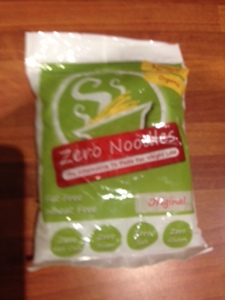
Zero Noodles: The perfect dinner?

Before I ever recommend anything, I always try it first. From juices to footwear, exercises to music.

I’ve been vegetarian for many years and also wheat free, and tonight I will be tucking into a plate of Zero Noodles. They have so few calories that you burn whatever calories they do have whilst you are eating them. They are also gluten free and organic.

Sounds too good to be true? It will all come down to how they taste, and I’ll tell you that later! If the taste matches the other impressive features, then they might just be a great way to eat healthily and help control your weight.

(How many people are now praying for Zero Chocolate? That would make a few pounds for the inventor).

Try this lovely, quick recipe for your noodles. You can use whatever vegetables you can get your hands on.

Ingredients
1 packet Zero Noodles (200gms, 7 Oz )
4 spring onions, sliced crosswise, greens and whites separated
About 1 cup purple cabbage, shredded
1/4 cup frozen beans
About 1 cup thinly sliced multi colored capsicum
1 medium carrot, julienned
1 medium celery, thinly sliced
1/2-1 cup bean sprouts
1-2 garlic, finely minced
1-2 tbsp low sodium soy sauce
1-2 tbsp chilli sauce
Salt and pepper to taste

Cooking Method
1 Boil the noodles as per the package instructions. Add the salt and oil to the water.

2 When 85-90% cooked, drain the noodles and toss lightly with cold water. Drain completely and set aside until ready to use.

3 Heat a Wok with about 1 tsp of oil until it smokes. Make sure you have all the vegetables ready as its all about quick cooking. Add the garlic followed by spring onion greens, bell peppers, cabbage, celery, carrots and beans. Toss on high flame for 2 minutes. Don’t leave the vegetables on their own since at this stage they can get lonely and easily burn. You need to keep tossing them.

4 When you find the vegetables softening slightly, add the noodles, soy sauce, salt, pepper, chilli sauce, bean sprouts along with spring onion greens.

5 Give it a good toss and saute for another minute or so.

20131215-145807.jpg

When is meat not meat? Read this before you go shopping…

As most of you know I am vegetarian, so can I write an unbiased blog about meat? I certainly can if my information is based on facts.

I really have no issue with people who eat meat. I am totally tolerant of other people’s choices (as any good Buddhist should be). I choose to be vegetarian for many reasons, one reason being my concerns about the quality of much of the meat that is on sale. I never try to “convert” people, but I think it is important to have all the facts available so we can all make an educated choice.
The reason for my blog today is a couple of reports this week. The first is about the water content of frozen chicken sold in leading supermarkets. A recent study has found that between 13% and 18% of frozen chicken is simply water. That means that people are paying around £1.50 (2€) per kilo for water! So why is there so much water in the frozen chicken? The manufacturers say it is essential to improve the flavour and moisture. Believe this is you want, but the other reason is of cause to add bulk and therefore increase profits.

If this was not bad enough news for frozen chicken eaters, it gets worse. The Food Standards Agency (FSA) in the UK are investigating a major UK importer of poultry who it is claimed, imported frozen chicken from Brazil, defrosted it, added water, then froze it again for sale. But the water that was added also included additives to help the meat to absorb the water. It is common for extracted protein to be used to bind in the extra fluid, and some years ago there was controversy as it was claimed that the added protein in chickens also included proteins from beef and pork. The FSA are again today investing new claims that undeclared proteins have been added to chicken.

Also this week there was an official report produced for the UK Government following the horsemeat contamination that hit the UK and Europe earlier this year. This involved several beef products in several supermarkets being found to contain horse DNA. This report concluded that large amount of meat of “dubious origin and quality” is still being sold by a web of international traders. Some gourmet burgers were found to contain offal such as heart. Most worryingly, the report concluded that some of the meat on sale was not fit for human consumption, and was intended for dog food rather than supermarket shelves.

The food scandal extends beyond meat. It is an interesting fact that the UK alone consumed 1,800 tonnes of Manuka Honey, when the only official producers in New Zealand only produced 1,700 in total for the whole world! Also, as pomegranate’s popularity increases as a “superfruit” there are questions being asked as to how 400 new drinks are now available without any way of an immediate increase in pomegranate trees (they take two to three years to start producing fruit).

We are what we eat. Really. It amazes me that some people buy higher quality products for their pets or the cars than they do for themselves. In my opinion we should always buy the best possible food that we can afford, and always try to know as much about the source of the food. Whilst this can never remove all the risks of buying something of a poor quality, it can reduce the risks.

Generally speaking, if something seems too cheap to be true, then it probably is.